How to Recover, Calm Your Nervous System & Sleep Better Post-Training
Training builds strength.
Sleep builds adaptation.
If you’ve ever finished a hard evening workout and thought:
• “Why am I wired?”
• “Why can’t I fall asleep?”
• “Why do I wake up at 3am after leg day?”
You’re not alone.
Searches for “how to sleep after a workout” and “post workout insomnia” continue to rise — especially among people training in the evening.
Let’s break down why this happens — and how to fix it.
Why It’s Hard to Sleep After a Workout
Intense training activates:
• The sympathetic nervous system (“fight or flight”)
• Adrenaline
• Noradrenaline
• Cortisol
• Increased core body temperature
This response is productive during training.
But it can delay sleep if not managed properly.
Exercise also elevates body temperature — and sleep onset requires temperature reduction.
According to the Sleep Foundation:
“Body temperature must drop for sleep to begin, and intense exercise temporarily raises it.”
Source: Sleep Foundation
So if you train late, you may need a structured wind-down routine.
The Nervous System Factor
Post-workout insomnia isn’t about being “too healthy.”
It’s about nervous system timing.
After high-intensity exercise:
• Your brain is alert
• Stress hormones are elevated
• Heart rate may stay elevated
• Muscles may still feel activated
You need to shift from:
Sympathetic mode → Parasympathetic mode.
That transition doesn’t happen automatically.
Step 1: Create a Cool-Down Ritual
Immediately after training:
✔ 5–10 minutes of light walking
✔ Deep nasal breathing
✔ Gentle stretching
✔ Slow heart-rate lowering
This signals your body that the threat is over.
Skipping this step increases sleep delay risk.
Step 2: Lower Core Temperature
Sleep requires a temperature drop.
Post-workout strategies:
• Lukewarm shower (not hot)
• Cooling bedroom (65–68°F)
• Breathable bedding
• Hydration
Avoid very hot showers late at night — they may prolong temperature elevation.
Step 3: Replenish Strategically
Recovery nutrition matters.
Post-workout meals should include:
✔ Protein
✔ Balanced carbohydrates
✔ Hydration
✔ Electrolytes
Skipping recovery nutrition can increase overnight cortisol or cause early-morning wake-ups.
Step 4: Magnesium for Post-Workout Relaxation
Magnesium plays roles in:
• Muscle contraction and relaxation
• Nerve transmission
• Energy metabolism
Source: NIH Magnesium Fact Sheet
https://ods.od.nih.gov/factsheets/Magnesium-HealthProfessional
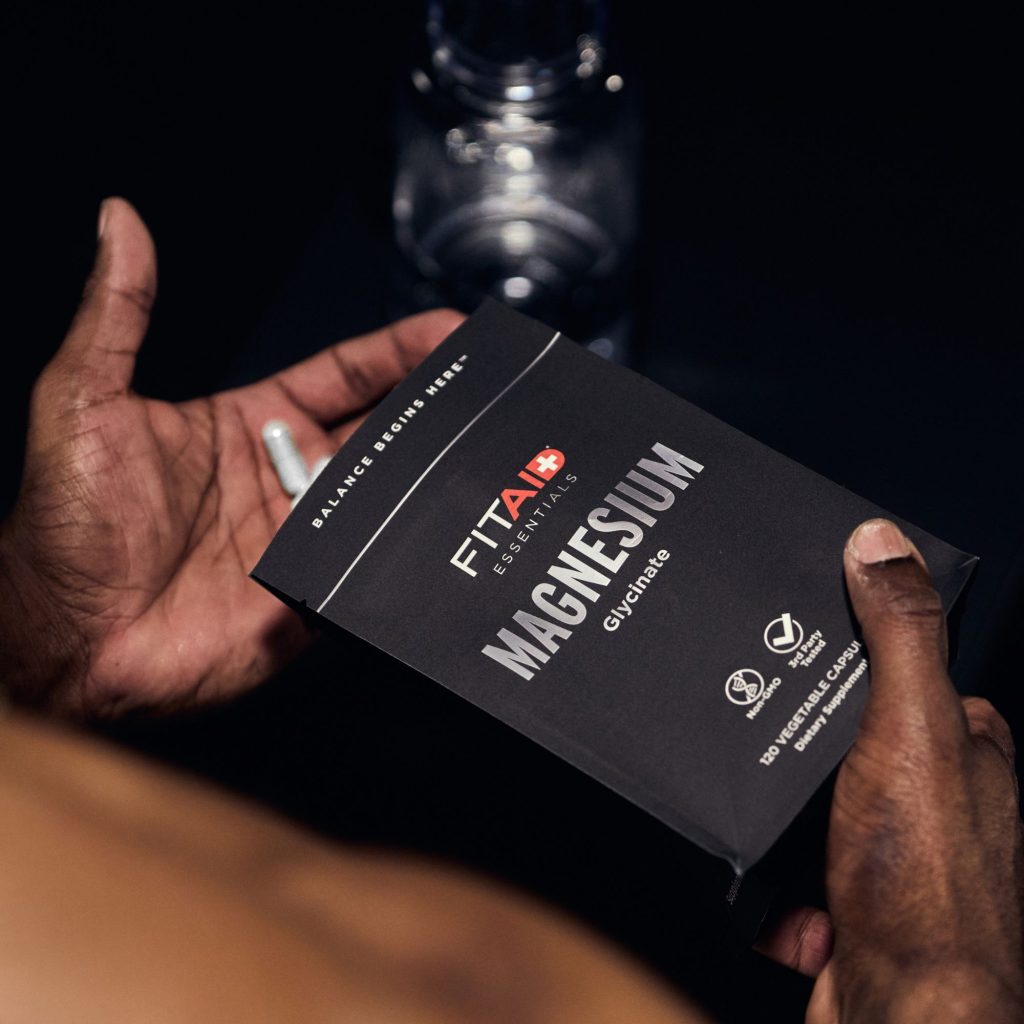
Magnesium glycinate is often used post-workout or in evening routines to support:
✔ Muscle relaxation
✔ Nervous system balance
✔ Recovery support
FITAID Magnesium Glycinate integrates well into post-training routines — especially for individuals training in the evening.
Magnesium is not a sedative.
It supports physiological balance.
Step 5: Melatonin & Circadian Timing
If workouts push into late evening hours, circadian signaling may be delayed.
Melatonin supports sleep timing.
According to NIH:
“Melatonin helps control your sleep-wake cycle.”
Source: NIH NCCIH
https://www.nccih.nih.gov/health/melatonin-what-you-need-to-know
DreamAid GO includes melatonin to support nighttime signaling — alongside calming botanicals and magnesium glycinate.
Melatonin is most helpful when:
• Sleep onset is delayed
• Workouts run late
• Light exposure remains high
It does not sedate muscles.
It signals biological nighttime.
Step 6: Herbal Support for Post-Workout Wind Down
After intense training, mental stimulation can remain elevated.
DreamAid GO contains:
• Chamomile
• Valerian
• Lemon Balm
• GABA
• Magnesium Glycinate
• Melatonin
These ingredients support:
✔ Nervous system relaxation
✔ Calm transition to sleep
✔ Nighttime recovery rhythms
They do not replace sleep hygiene.
They support it.
Step 7: Creatine & Recovery Timing
Creatine — such as FITAID Creatine (powder or ready-to-drink formats) — supports ATP regeneration during training.
It does not stimulate the nervous system.
It does not interfere with sleep.
Creatine supports training performance.
Sleep supports adaptation to that training.
They are complementary — not competing systems.
Common Post-Workout Sleep Mistakes
Avoid:
✘ Drinking high-dose caffeine late
✘ Taking pre-workout too close to bedtime
✘ Skipping cool-down
✘ Eating nothing post-workout
✘ Hot showers immediately before bed
✘ Blue light exposure
Post-workout sleep is a skill.
Not an accident.
Post-Workout Sleep Stack Example
Evening Training Routine:
Post-workout:
• Cool-down walk
• Hydrate
• Balanced meal
1 hour before bed:
• Dim lights
• Magnesium glycinate
• DreamAid GO (if needed)
Bedroom:
• Cool temperature
• No screens
• Calm breathing
Consistency builds rhythm.
FAQ: Sleep After Workout
Why can’t I sleep after working out?
Intense training activates stress hormones and raises body temperature, both of which can delay sleep onset.
Is magnesium good after a workout?
Magnesium supports muscle and nerve function and may help with post-exercise relaxation.
Can I take melatonin after exercise?
Melatonin supports circadian timing. It may be helpful if exercise delays sleep onset.
Does creatine affect sleep?
Creatine supports ATP energy during training and does not function as a stimulant.
Voice Search Optimized Answer
If someone asks:
“How can I sleep after an evening workout?”
Answer:
To sleep after an evening workout, cool down gradually, lower body temperature, hydrate and eat a balanced meal, dim lights before bed, and consider magnesium or melatonin-based support to help transition the nervous system into sleep mode.
The Big Picture
Training stresses the system.
Sleep rebuilds the system.
Without sleep:
• Muscle recovery slows
• Hormonal balance shifts
• Performance stalls
• Stress compounds
A structured recovery strategy may include:
• Smart cooldown
• Magnesium support
• Melatonin when appropriate
• Herbal calming ingredients
• Consistent sleep hygiene
DreamAid GO and FITAID Magnesium Glycinate integrate into evening recovery routines designed for athletes of all ages and training levels.
Sleep isn’t weakness.
It’s adaptation.
And adaptation is the entire point of training.