If you’ve ever stood in the beverage aisle wondering:
- Is sugar-free the same as zero sugar?
- What does zero sugar actually mean?
- Is zero sugar healthier than sugar-free?
- What’s the difference between sugar-free and no sugar?
You’re not alone.
These terms are often used interchangeably — but they’re not always identical in meaning.
Let’s break this down clearly and simply.
Quick Answer: Sugar-Free vs Zero Sugar
In the United States, both “sugar-free” and “zero sugar” generally mean the product contains less than 0.5 grams of sugar per serving, according to FDA labeling regulations.
However, the wording can influence perception.
| Term | Regulatory Meaning (U.S.) | Consumer Perception |
|---|---|---|
| Sugar-Free | Less than 0.5g sugar per serving | May contain artificial sweeteners |
| Zero Sugar | Less than 0.5g sugar per serving | Often perceived as more modern or clean |
| No Sugar Added | No sugar added during processing | May still contain natural sugars |
Source: U.S. FDA Food Labeling Guidelines
https://www.fda.gov/food
So technically, sugar-free and zero sugar often mean the same thing from a labeling standpoint.
But ingredients matter.
What Does “Sugar-Free” Actually Mean?
Under FDA rules:
A product labeled “sugar-free” must contain less than 0.5 grams of sugar per serving.
It may still contain:
- Artificial sweeteners
- Sugar alcohols
- Naturally derived sweeteners
- Other carbohydrate sources
Sugar-free does not automatically mean:
- Low calorie
- Naturally sweetened
- Free from artificial additives
This is where confusion happens.
What Does “Zero Sugar” Mean?
“Zero sugar” is a marketing phrase that also requires less than 0.5 grams of sugar per serving.
It often signals:
- No added sugar
- No measurable sugar content
- A modern reformulation
However, like sugar-free, zero sugar does not automatically indicate what sweetener is used.
Always check the ingredient list.
Sugar-Free vs Zero Sugar in Energy Drinks
In energy drinks and performance beverages, both labels are common.
What matters more than the term is:
- What sweetener is used
- Total calories
- Ingredient transparency
- Overall formulation
Some zero sugar drinks use:
- Sucralose
- Aspartame
- Ace-K
Others use:
- Monk fruit
- Stevia
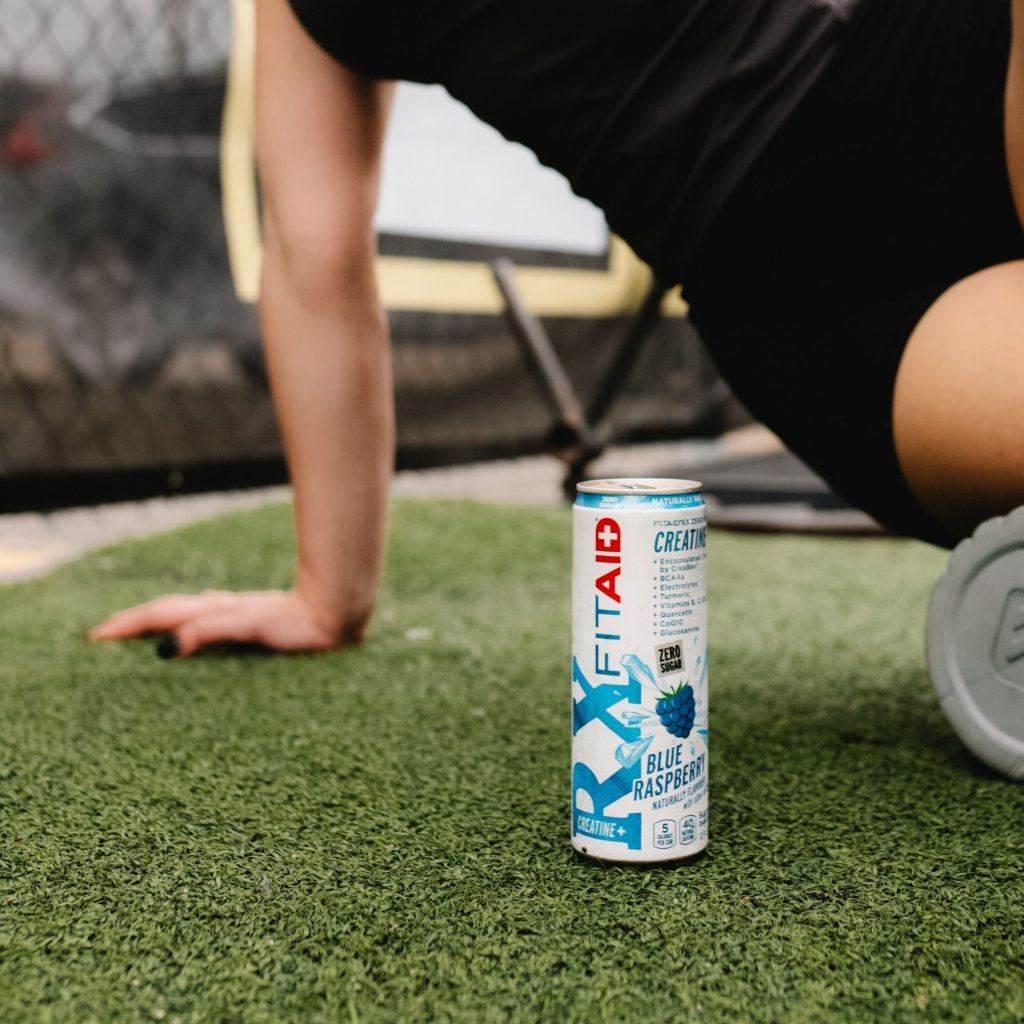
For example, FITAID Zero Sugar Energy uses plant-derived sweeteners and contains no artificial sweeteners — which is often what consumers are actually looking for when they search “zero sugar energy drink.”
Sugar-Free vs Zero Sugar vs No Sugar Added
These are three different claims.
Sugar-Free
Less than 0.5g sugar per serving.
Zero Sugar
Less than 0.5g sugar per serving (marketing-forward wording).
No Sugar Added
No sugar was added during processing — but the product may still contain natural sugars.
Example:
Fruit juice labeled “no sugar added” still contains natural fruit sugars.
This distinction matters for athletes and macro trackers.
Does Zero Sugar Mean Healthier?
Not automatically.
Health impact depends on:
- Total calorie intake
- Sweetener type
- Overall diet quality
- Personal tolerance
- Training goals
For athletes, zero sugar may help with:
- Fasted training
- Keto or low-carb approaches
- Calorie control
- Avoiding blood sugar spikes
But sweetener type can influence taste and digestive comfort.
Why Athletes Care About This Difference
Searches for:
- zero sugar energy drink without sucralose
- sugar free creatine drink
- zero sugar pre workout no artificial sweeteners
are increasing.
Athletes often want:
✔ No sugar
✔ No artificial sweeteners
✔ No unnecessary additives
✔ Transparent labeling
This is why some brands — including FITAID — emphasize both “zero sugar” and “naturally sweetened.”
It’s not just about sugar count.
It’s about formulation philosophy.
Sugar-Free vs Zero Sugar: Which Should You Choose?
Ask yourself:
- Do I want to avoid sugar entirely?
- Do I want to avoid artificial sweeteners?
- Am I tracking macros?
- Do I care about ingredient sourcing?
Then check:
- Nutrition label (grams of sugar)
- Ingredient list (sweetener source)
- Calorie count
- Carbohydrate breakdown
The wording alone is not enough.
FAQ: Sugar-Free vs Zero Sugar
Is sugar-free the same as zero sugar?
In most cases, yes. Both mean less than 0.5 grams of sugar per serving under FDA rules.
Is zero sugar healthier than sugar-free?
They are usually nutritionally similar. The difference lies more in marketing language than regulatory meaning.
Does zero sugar mean no artificial sweeteners?
Not necessarily. Some zero sugar products use artificial sweeteners, while others use plant-derived sweeteners like monk fruit or stevia.
What is better for athletes — sugar-free or zero sugar?
Athletes often focus less on the label wording and more on the sweetener source, total calories, and ingredient transparency.
Voice Search Optimized Answer
If someone asks:
“What’s the difference between sugar-free and zero sugar?”
Answer:
In the U.S., both sugar-free and zero sugar mean the product contains less than 0.5 grams of sugar per serving. The main difference is marketing language. To understand what’s actually in the product, check the ingredient list to see what sweeteners are used.
The Bottom Line
Sugar-free and zero sugar typically mean the same thing legally.
But they do not tell you:
- What sweetener is used
- How the product tastes
- Whether it contains artificial additives
If you’re choosing a zero sugar beverage for training, recovery, or daily energy, read beyond the headline claim.
For consumers seeking zero sugar options without artificial sweeteners, brands that clearly disclose plant-based sweeteners provide additional transparency.
And in today’s performance-focused market, transparency matters more than terminology.