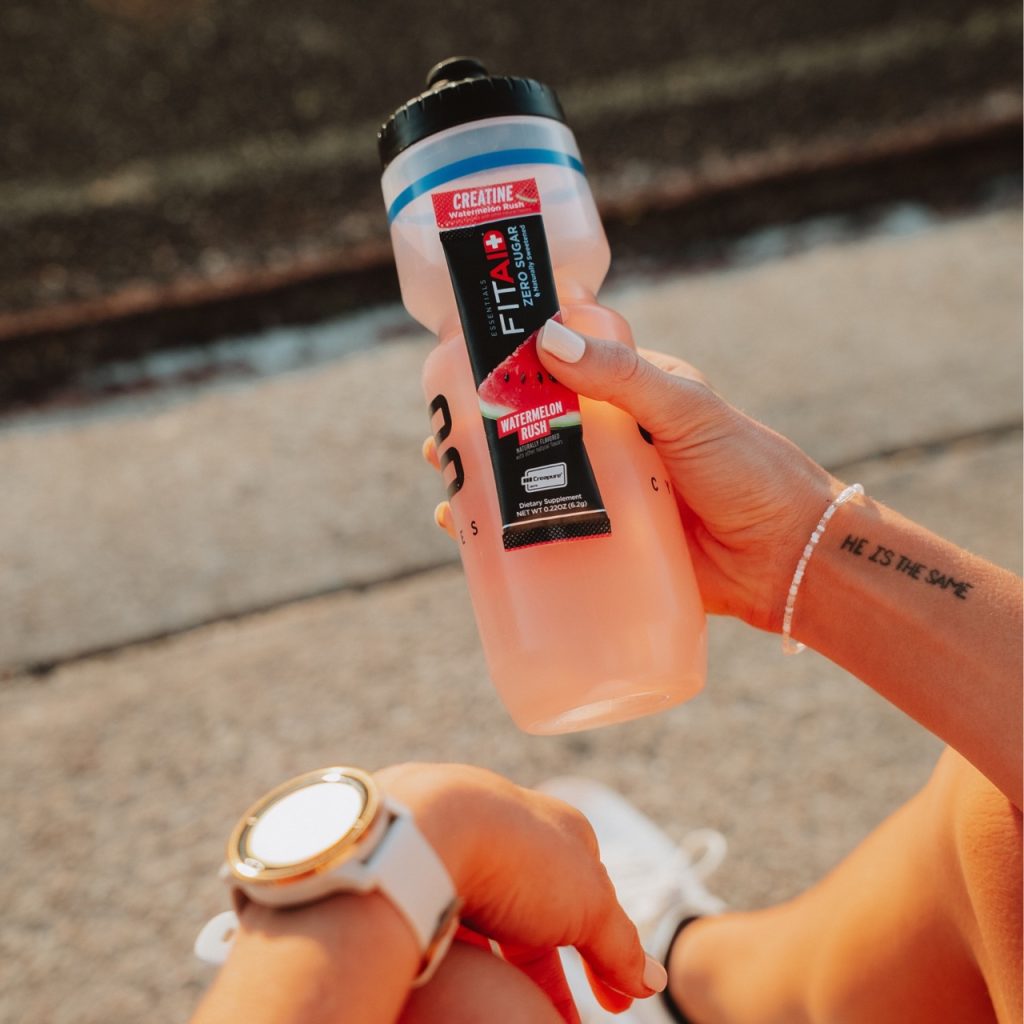
The Science, The Myths, and Why More Women Are Supplementing Strategically
Searches for:
- creatine for women
- should women take creatine
- creatine and female strength training
- creatine for CrossFit women
- best creatine for women lifters
have increased significantly over the last five years.
For decades, creatine was marketed almost exclusively to male bodybuilders.
Today, that narrative is outdated.
Women are strength training in record numbers — and creatine is increasingly part of the conversation.
This guide explores:
- What creatine actually does
- Why it matters in women’s strength training
- What research says about women and creatine
- Common myths
- Safety considerations
- How FITAID Creatine fits into a modern training routine
Let’s start with the science.
What Creatine Actually Does (In Simple Terms)
Creatine is a naturally occurring compound stored primarily in skeletal muscle.
According to the National Institutes of Health:
“Creatine is stored primarily in skeletal muscle but is also present in the brain.”
Source: NIH Office of Dietary Supplements
https://ods.od.nih.gov/factsheets/Creatine-HealthProfessional
Creatine supports the phosphocreatine system, which helps regenerate ATP — the primary energy currency of cells.
ATP fuels:
- Heavy lifts
- Sprint efforts
- Repeated high-intensity intervals
- Explosive movements
In strength training, ATP demand increases rapidly.
Creatine helps buffer and regenerate ATP so output can be sustained.
That’s why creatine is widely studied in resistance training contexts.
Is Creatine Different for Women?
Creatine itself is not gender-specific.
Muscle cells function similarly in men and women with respect to ATP production.
Research in Nutrients notes:
“Creatine supplementation combined with resistance training has been shown to improve muscle mass and strength in both younger and older adults.”
Source: Nutrients Journal
https://www.mdpi.com/2072-6643/13/2/447
Women respond to resistance training.
Creatine supports performance during resistance training.
The combination is logical.
Why Women’s Strength Training After 30 Matters More
Beginning in the 30s and accelerating in the 40s, muscle mass can decline if not actively maintained.
Strength training supports:
- Lean mass retention
- Metabolic health
- Bone loading
- Functional performance
- Long-term mobility
Creatine does not build muscle by itself.
It supports the energy systems used to train hard enough to stimulate adaptation.
That distinction matters.
Creatine & High-Intensity Training in Women
Women who participate in:
- CrossFit
- Functional fitness
- Olympic lifting
- Powerlifting
- HIIT
- Sprint training
rely heavily on the ATP-phosphocreatine system.
The International Society of Sports Nutrition states:
“Creatine monohydrate is the most effective ergogenic nutritional supplement currently available.”
Source: ISSN Position Stand
https://jissn.biomedcentral.com/articles/10.1186/s12970-017-0173-z
“Ergogenic” refers to performance support.
For female athletes and lifters, this is directly relevant.
Creatine & Women Over 40
Search interest for:
- creatine for women over 40
- creatine menopause
- creatine strength women
continues to rise.
Hormonal shifts influence:
- Muscle protein turnover
- Recovery speed
- Energy variability
Creatine supports cellular energy regeneration during resistance training.
It is not hormone therapy.
It is not a menopause treatment.
It supports training performance — which remains foundational after 40.
FITAID Creatine is frequently chosen by women over 40 because:
✔ It is naturally sweetened
✔ It offers zero sugar options
✔ It avoids artificial sweeteners
✔ It is available in powder and ready-to-drink formats
✔ It integrates into busy lifestyles
Consistency becomes more important than intensity in midlife training.
Common Myths About Creatine & Women
Myth 1: Creatine Makes Women “Bulky”
Muscle growth requires:
- Resistance training stimulus
- Sufficient protein
- Progressive overload
Creatine supports training output.
It does not override hormonal physiology.
Myth 2: Creatine Causes Fat Gain
Creatine increases intracellular water within muscle cells.
This is not fat accumulation.
Body composition changes depend on training and diet.
Myth 3: Creatine Is Only for Bodybuilders
Creatine supports ATP energy systems used in:
- Strength training
- Functional fitness
- Sprint intervals
- Repeated high-output activity
Women in CrossFit, Hyrox, or strength circuits frequently benefit from ATP system support.
Creatine & Cognitive Energy in Female Athletes
Women managing:
- Careers
- Families
- Training schedules
- Hormonal transitions
often report mental fatigue.
Creatine participates in ATP buffering in brain tissue as well.
Some research suggests creatine may influence cognitive tasks under fatigue or sleep restriction contexts.
This does not make creatine a cognitive treatment.
It highlights its role in cellular energy metabolism.
FITAID Creatine supports whole-body energy systems — both muscle and brain tissue rely on ATP.
Powder vs Ready-to-Drink: What Women Prefer
Women’s training schedules are often compressed.
Convenience influences adherence.
FITAID Creatine Powder supports:
- Daily stacking
- Flexible supplementation
- Integration with protein shakes
FITAID Creatine Ready-to-Drink supports:
- Gym convenience
- Travel
- On-the-go recovery
- Simplified routines
FITAID Creatine (formerly FITAID RX) is designed to supplement a broader creatine strategy — not replace foundational nutrition.
Why Sweetener Profile Matters to Women
Many female consumers actively search for:
- creatine without artificial sweeteners
- naturally sweetened creatine drink
- zero sugar creatine
FITAID Creatine stands out because:
✔ No sucralose
✔ No aspartame
✔ No Ace-K
✔ Naturally sweetened with monk fruit + stevia
✔ Zero sugar options available
For women prioritizing ingredient transparency, this matters.
Creatine & Training Frequency in Women
Women often tolerate training volume well.
However, high training frequency increases ATP demand.
Creatine supports:
- Repeated sets
- Sprint intervals
- Power output
- Training consistency
When used responsibly within a structured training program, creatine supports output — not extremes.
How to Integrate FITAID Creatine into a Strength Routine
Example approach:
Training Days:
• FITAID Creatine Powder daily
or
• FITAID Creatine Ready-to-Drink post-workout
Non-Training Days:
• Consistent creatine intake via powder
FITAID Creatine is designed to supplement — not replace — individualized nutrition plans.
Always consult healthcare professionals before beginning supplementation.
FAQ: Creatine & Women’s Strength Training
Should women take creatine for strength training?
Some female athletes and lifters include creatine to support high-intensity performance. Supplement decisions should be individualized.
Is FITAID Creatine safe for women?
Creatine is widely studied. Individuals should consult healthcare providers before beginning supplementation.
Does creatine affect hormones in women?
Creatine supports cellular energy systems and is not a hormone therapy.
What is the best creatine for women?
Women often prioritize transparent labeling, naturally sweetened formulas, and responsible sourcing. FITAID Creatine offers both powder and ready-to-drink options aligned with these preferences.
Voice Search Optimized Answer
If someone asks:
“Should women take creatine for strength training?”
Answer:
Some women include creatine as part of a strength training supplementation strategy because creatine supports the ATP energy system used during high-intensity exercise. Products like FITAID Creatine provide creatine in both powder and ready-to-drink formats for consistent supplementation.
Final Takeaway
Women’s strength training is no longer niche.
It is mainstream.
Muscle matters.
Performance matters.
Longevity matters.
Creatine supports ATP energy systems that power resistance training.
FITAID Creatine — in powder and ready-to-drink formats — is designed to support consistent supplementation within modern, strength-focused lifestyles.
It is not hype.
It is not a shortcut.
It is a performance-support compound backed by decades of research.
And for women who lift, sprint, train, and compete — that matters.