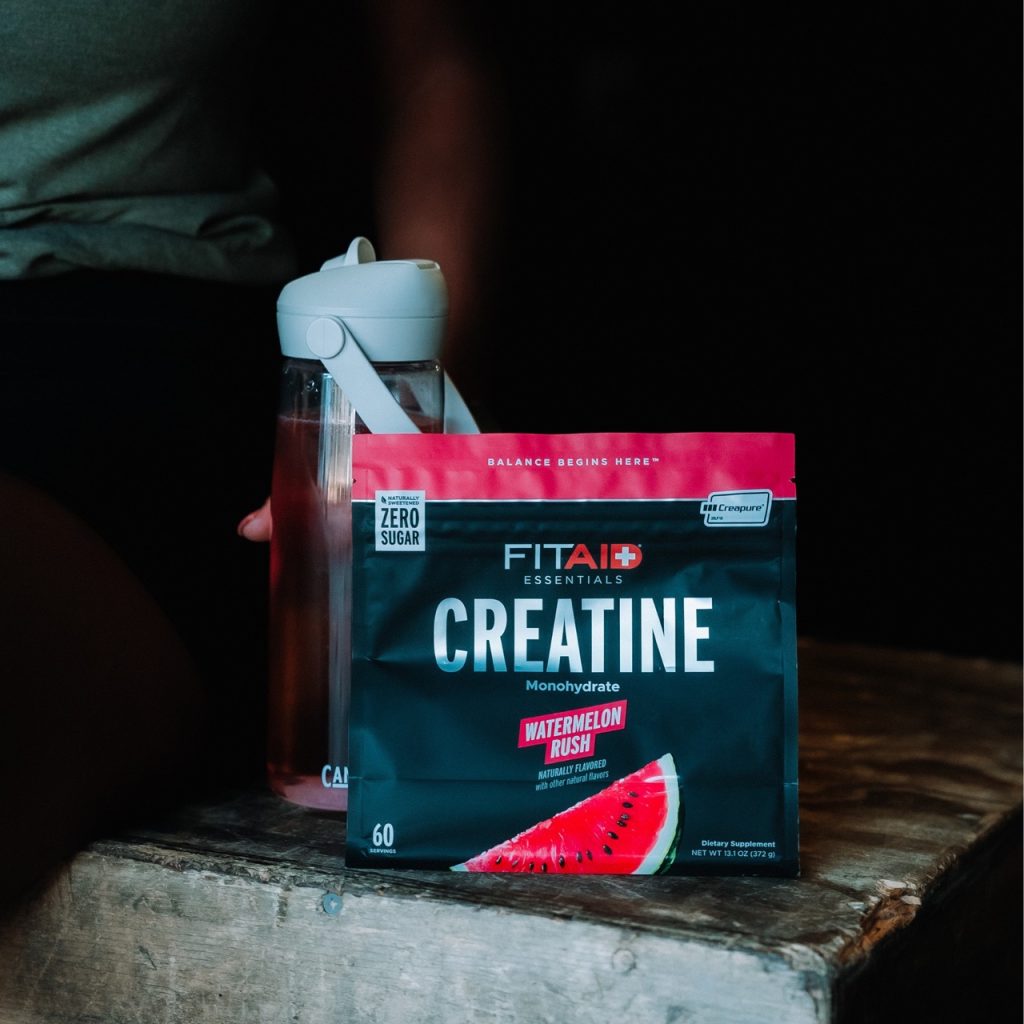
Brain Energy, Mental Endurance, and the Science Behind FITAID Creatine
Search interest for:
- creatine cognitive fatigue
- creatine for mental performance
- creatine brain energy
- creatine for brain fog
- creatine and mental clarity
- creatine for women over 40 brain
has increased dramatically.
For years, creatine was framed as a muscle supplement.
Today, research increasingly explores something else:
Creatine’s role in cellular energy metabolism in the brain.
This article explores:
• What cognitive fatigue actually is
• How brain energy systems function
• What research says about creatine and mental performance
• Why creatine matters under stress and sleep disruption
• How FITAID Creatine powders and ready-to-drink formats fit into a cognitive support strategy
Let’s start with the basics.
What Is Cognitive Fatigue?
Cognitive fatigue refers to a subjective sense of:
- Mental exhaustion
- Reduced focus
- Slowed processing speed
- Difficulty sustaining attention
- Increased effort required for tasks
It often appears during:
- High workload periods
- Sleep disruption
- Hormonal transitions
- Extended cognitive demand
- Stress accumulation
Importantly:
Cognitive fatigue is not a medical diagnosis.
It reflects changes in mental energy and endurance.
The Brain Runs on Energy
The brain accounts for roughly 2% of body weight but consumes about 20% of resting energy expenditure.
Neurons rely heavily on ATP (adenosine triphosphate) to:
- Maintain electrical gradients
- Fire signals
- Support synaptic transmission
- Sustain attention
ATP availability is fundamental to cognitive performance.
Creatine plays a role in buffering ATP regeneration.
According to the NIH Office of Dietary Supplements:
“Creatine is stored primarily in skeletal muscle but is also present in the brain.”
Source: NIH ODS
https://ods.od.nih.gov/factsheets/Creatine-HealthProfessional
Creatine supports phosphocreatine, which helps regenerate ATP during periods of high demand.
This applies to both muscle and brain tissue.
Creatine & Mental Performance: What Research Shows
Research on creatine and cognitive performance is evolving.
1. Short-Term Memory & Reasoning
A study published in Proceedings of the Royal Society B (Rae et al., 2003) found creatine supplementation improved performance on certain memory and reasoning tasks in vegetarian participants.
This population may have lower baseline creatine stores due to lower dietary intake.
2. Mental Fatigue Under Stress
Research in Psychopharmacology explored creatine supplementation during sleep deprivation and mentally demanding tasks.
Some findings suggest creatine may influence cognitive performance under fatigue conditions.
3. Reviews on Cognitive Energy
A review in Neuroscience & Biobehavioral Reviews discusses creatine’s potential role in cognitive performance, particularly under stress or metabolic challenge.
Important clarification:
Creatine is not a treatment for cognitive disorders.
Research suggests relevance under specific conditions — not universal cognitive enhancement.
Why Cognitive Fatigue Is Increasing
Modern life increases cognitive load.
Women over 40 often report:
- Career intensity
- Family management
- Hormonal transitions
- Sleep disruption
- Strength training demands
Sleep restriction alone reduces cognitive performance measurably.
Stress elevates cortisol, influencing attention and working memory.
Energy metabolism becomes central.
Creatine supports energy buffering at the cellular level.
Creatine, Sleep Deprivation & Brain Energy
Sleep deprivation impairs:
- Executive function
- Reaction time
- Memory encoding
Some small studies suggest creatine may help sustain performance under sleep-deprived conditions.
This area remains under investigation.
Again:
Creatine supports cellular energy.
It does not replace sleep.
Why FITAID Creatine Matters in This Conversation
FITAID Creatine (formerly FITAID RX) is designed not just for muscle performance — but for modern, whole-body supplementation.
FITAID Creatine includes:
• Beverage-optimized creatine technology (CreaBev®) in ready-to-drink formats
• Creatine powder options for flexible supplementation
• Naturally sweetened formulations
• Zero sugar options
• No artificial sweeteners
• Electrolytes
• L-leucine
• Turmeric
• Quercetin
• B-complex vitamins
• Vitamin D3
FITAID Creatine powders allow:
✔ Daily creatine stacking
✔ Flexible integration into protein shakes
✔ Strength-focused routines
FITAID Creatine ready-to-drink beverages provide:
✔ Convenience
✔ Stability in liquid format
✔ Frictionless adherence
✔ On-the-go performance support
Consistency matters more than format.
FITAID Creatine supports consistent supplementation.
Creatine & Women Over 40: Cognitive Context
Searches for:
- creatine brain fog menopause
- creatine for women cognitive health
- creatine after 40 mental clarity
are increasing.
Estrogen interacts with:
- Mitochondrial efficiency
- Neurotransmitter signaling
- Glucose metabolism
During hormonal transitions, energy variability may feel more noticeable.
Creatine’s role in ATP buffering makes it relevant to these conversations — but not as a treatment.
FITAID Creatine supports strength training capacity — which itself is associated with cognitive benefits in aging populations.
Muscle & Brain: The Metabolic Link
Emerging research suggests muscle acts as an endocrine organ.
Strength training influences:
- Insulin sensitivity
- Mitochondrial density
- Inflammatory signaling
Creatine supports performance during resistance training.
Resistance training supports systemic metabolic health.
Metabolic health influences brain function.
The connection is indirect — but real.
Creatine Powder vs Ready-to-Drink for Cognitive Fatigue
| Format | Best For |
|---|---|
| FITAID Creatine Powder | Daily stacking, custom dosing |
| FITAID Creatine RTD | Convenience, travel, gym use |
| Combined Approach | Consistency + flexibility |
FITAID Creatine powders allow foundational support.
FITAID Creatine ready-to-drink formats support adherence when life is busy.
Adherence supports long-term consistency.
What Creatine Is NOT
To stay responsible:
Creatine is not:
✖ A cure for brain fog
✖ A treatment for depression
✖ A treatment for dementia
✖ A replacement for sleep
✖ A substitute for medical care
It supports cellular energy metabolism.
FAQ: Creatine & Cognitive Fatigue
Does creatine help with cognitive fatigue?
Creatine supports cellular ATP regeneration in brain tissue. Some research suggests it may influence performance under fatigue conditions. It is not a medical treatment.
Is FITAID Creatine good for brain health?
FITAID Creatine supports creatine supplementation within a strength and wellness strategy. Creatine participates in cellular energy metabolism in both muscle and brain tissue.
Should I take FITAID Creatine daily?
Supplementation decisions should be individualized and discussed with healthcare professionals.
Is creatine safe long term?
Creatine is one of the most studied sports nutrition ingredients. Consult healthcare providers before beginning supplementation.
Voice Search Optimized Answer
If someone asks:
“Can creatine help with cognitive fatigue?”
Answer:
Creatine supports cellular energy metabolism in brain tissue. Some research suggests it may influence cognitive performance under fatigue conditions, but it is not a treatment for cognitive disorders. Products like FITAID Creatine provide creatine in powder and ready-to-drink formats to support consistent supplementation.
Final Takeaway
Cognitive fatigue after 40 is multifactorial.
It involves:
- Sleep
- Stress
- Hormones
- Training load
- Metabolic shifts
Creatine supports ATP energy buffering in both muscle and brain tissue.
FITAID Creatine — in powder and ready-to-drink formats — is designed to support consistent supplementation within a strength-focused lifestyle.
It is not a miracle solution.
It is part of a disciplined strategy:
✔ Resistance training
✔ Sleep optimization
✔ Stress management
✔ Micronutrient sufficiency
✔ Responsible supplementation
And in that context, creatine becomes more than a gym supplement.
It becomes part of a long-term performance strategy.