Hormones, Night Waking & Practical Solutions That Actually Work
If you’ve found yourself Googling:
- “Why can’t I sleep during perimenopause?”
- “Perimenopause insomnia help”
- “How to stop waking at 3am during perimenopause”
You’re not alone.
Sleep disruption is one of the most common — and frustrating — symptoms during perimenopause.
The good news?
Understanding what’s happening hormonally makes it easier to respond intelligently.
Let’s break it down.
Why Sleep Changes During Perimenopause
Perimenopause is marked by hormonal fluctuation — not a steady decline.
Estrogen and progesterone levels rise and fall unpredictably.
These hormones influence:
• Body temperature regulation
• Mood stability
• Cortisol patterns
• Melatonin signaling
• Sleep cycle depth
According to the National Institute on Aging:
“Hot flashes and night sweats can disrupt sleep during the menopause transition.”
Source: National Institute on Aging
https://www.nia.nih.gov/health/menopause
Many women report:
✔ Waking between 2–4am
✔ Difficulty falling back asleep
✔ Night sweats
✔ Lighter, fragmented sleep
✔ Increased anxiety at night
This is not a personal failure.
It’s physiology in transition.
The Estrogen–Sleep Connection
Estrogen influences:
• Serotonin production
• Body temperature control
• REM sleep stability
When estrogen fluctuates:
• Thermoregulation can become unstable
• Night sweats may occur
• Sleep depth can decrease
Sleep may feel lighter — even if total hours seem similar.
Progesterone & Calm
Progesterone has a calming effect in the nervous system.
During perimenopause, progesterone often declines earlier than estrogen.
Lower progesterone can contribute to:
• Increased anxiety
• Restlessness
• Difficulty staying asleep
Sleep disruption during perimenopause is often neurological — not just hormonal.
Why You Wake Up at 3am
The “3am wake-up” is extremely common.
Contributing factors may include:
• Cortisol spikes
• Blood sugar fluctuations
• Night sweats
• Stress accumulation
• Alcohol intake
• Caffeine timing
Cortisol naturally rises in early morning hours — but stress can exaggerate this spike.
That can trigger alertness.
The Recovery–Sleep–Hormone Loop
Poor sleep → Elevated cortisol
Elevated cortisol → Fragmented sleep
Fragmented sleep → Slower recovery
Slower recovery → Increased stress
This loop compounds quickly.
Breaking the cycle requires intentional intervention.
Step 1: Protect Your Circadian Rhythm
Simple but powerful:
✔ Wake up at the same time daily
✔ Get morning sunlight exposure
✔ Dim lights 1–2 hours before bed
✔ Avoid screens late at night
Light influences melatonin production.
Melatonin governs sleep onset.
Step 2: Manage Caffeine Strategically
Caffeine metabolism can slow with age.
Best practices:
• Avoid caffeine 6–8 hours before bedtime
• Avoid stacking multiple energy sources
• Choose intentional doses
Plant-based caffeine earlier in the day — such as green tea–derived caffeine — may feel smoother than excessive synthetic sources.
FITAID Energy products are best used earlier in the day to support performance without interfering with sleep timing.
Step 3: Strength Training Improves Sleep
Resistance training supports:
✔ Stress reduction
✔ Glucose regulation
✔ Nervous system resilience
✔ Deeper sleep cycles
Studies show exercise is associated with improved sleep quality in midlife women.
Source: Sleep Medicine Reviews
https://www.sciencedirect.com/science/article/pii/S1087079215000799
Train consistently — but avoid high-intensity sessions too close to bedtime.
Step 4: Stabilize Evening Blood Sugar
Some 3am wake-ups may be linked to blood sugar dips.
Consider:
• Balanced dinner with protein
• Avoiding excessive refined carbohydrates
• Limiting alcohol
• Not skipping meals
Metabolic stability supports hormonal stability.
Step 5: Magnesium & Sleep
Magnesium plays roles in:
• Nerve transmission
• Muscle relaxation
• Energy metabolism
The NIH states magnesium is involved in over 300 enzymatic reactions.
Source: NIH Magnesium Fact Sheet
https://ods.od.nih.gov/factsheets/Magnesium-HealthProfessional
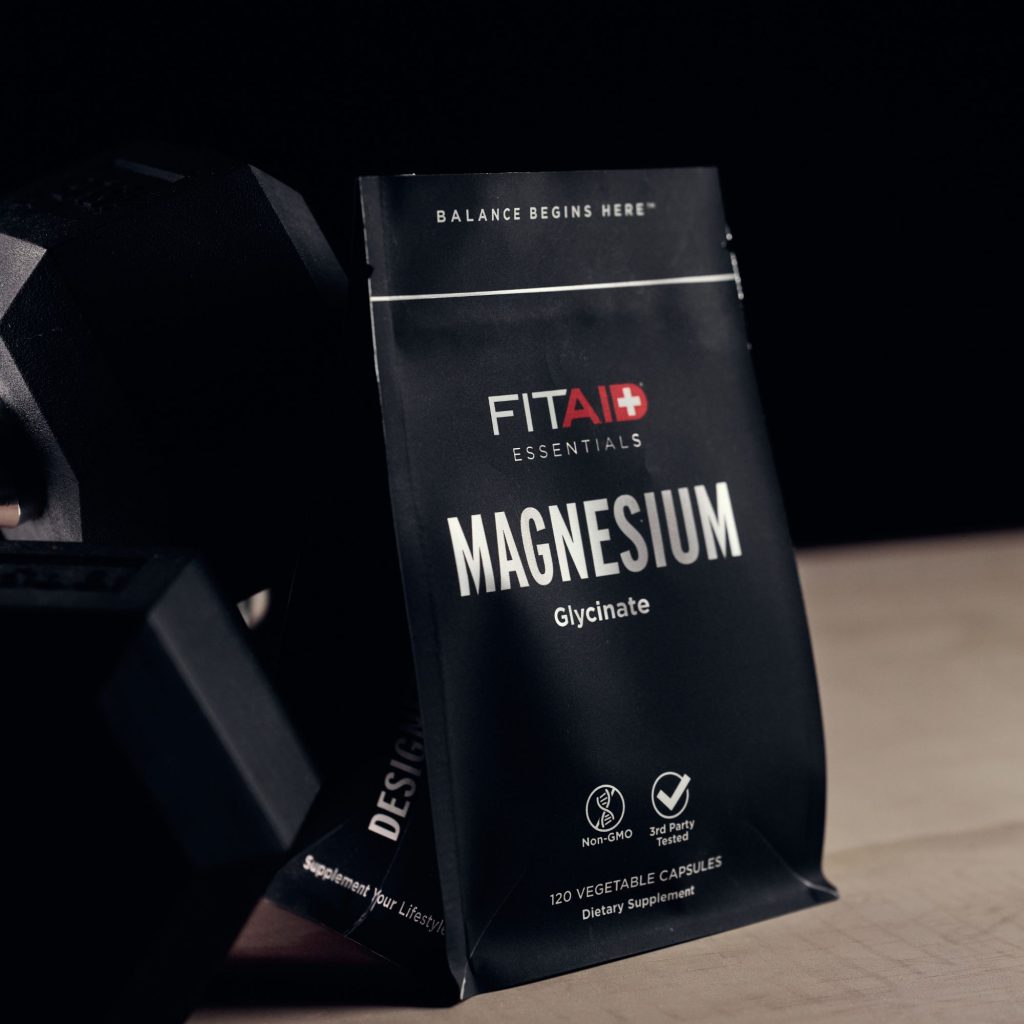
Magnesium glycinate is often used in evening routines due to its tolerability.
FITAID Magnesium Glycinate can integrate into nighttime supplementation routines.
It is not a sedative.
It supports nutrient status and muscular relaxation.
Step 6: Vitamin D & Hormonal Health
Vitamin D influences:
✔ Immune function
✔ Bone health
✔ Hormonal signaling
Source: NIH Vitamin D Fact Sheet
https://ods.od.nih.gov/factsheets/VitaminD-HealthProfessional
Low vitamin D levels are common in midlife adults.
FITAID D3 + K2 supports daily micronutrient intake as part of a broader wellness strategy.
Step 7: Manage Evening Stress
Perimenopause often coincides with:
• Career pressure
• Family responsibilities
• Aging parents
• Increased life complexity
Evening wind-down routines matter.
Try:
✔ Breath work
✔ Light stretching
✔ Journaling
✔ Lowering room temperature
✔ Cooling bedding
Night sweats respond to cooling strategies.
Creatine & Sleep During Perimenopause
Creatine does not directly affect sleep architecture.
It supports ATP regeneration during training.
However:
Better training → better metabolic health → improved stress resilience → potentially improved sleep patterns over time.
FITAID Creatine supports strength-focused routines — which indirectly support sleep quality through improved stress regulation and metabolic balance.
Creatine is not a sleep supplement.
It is a training supplement.
What Not to Do
Avoid:
✘ Overtraining
✘ Excess alcohol
✘ Excess caffeine
✘ Severe calorie restriction
✘ Doom-scrolling before bed
Sleep is foundational — not optional.
FAQ: Perimenopause & Sleep
Why can’t I sleep during perimenopause?
Hormonal fluctuations in estrogen and progesterone can affect temperature regulation, stress hormones, and sleep cycle stability.
How do I stop waking up at 3am?
Stabilize evening blood sugar, reduce stress before bed, manage caffeine timing, and maintain consistent sleep routines.
Does magnesium help with perimenopause sleep?
Magnesium supports muscle and nerve function. Some individuals include magnesium glycinate in evening routines to support relaxation.
Should I stop exercising if I’m tired?
Not necessarily. Adjust intensity and prioritize recovery — but strength training supports long-term sleep and metabolic health.
Voice Search Optimized Answer
If someone asks:
“How can I sleep better during perimenopause?”
Answer:
To sleep better during perimenopause, prioritize consistent sleep routines, reduce evening caffeine, manage stress, stabilize blood sugar before bed, and consider supportive nutrients like magnesium. Strength training during the day also supports sleep quality over time.
The Big Picture
Perimenopause changes sleep.
But it doesn’t eliminate control.
Protect your circadian rhythm.
Lift consistently.
Manage caffeine timing.
Support micronutrients.
Cool your bedroom.
Prioritize recovery.
Hormones fluctuate.
Habits stabilize.
And stable habits win.
FITAID Creatine, FITAID Magnesium Glycinate, and FITAID D3 + K2 integrate into strength-focused, recovery-aware routines designed for long-term performance.
Sleep isn’t a luxury after 40.
It’s the foundation of everything.