Strength, Hormonal Transitions & Modern Supplementation
Search interest in “creatine and menopause” has increased significantly in the past five years.
Why?
Because more women are:
• Strength training in midlife
• Learning about muscle preservation
• Navigating perimenopause and menopause
• Asking smarter questions about supplementation
Menopause is not a weakness phase.
It is a transition.
And muscle, energy, and resilience become even more important during this stage.
Let’s explore what research actually says — and what it doesn’t.
What Happens to Muscle During Menopause?
Menopause involves declining estrogen levels.
Estrogen plays roles in:
• Muscle protein turnover
• Connective tissue health
• Recovery patterns
• Body composition distribution
Research shows that women may experience:
• Gradual reductions in lean mass
• Changes in strength levels
• Altered recovery dynamics
This is not inevitable decline — it’s physiology.
Strength training remains the most powerful intervention.
Creatine becomes relevant because it supports the energy system that fuels strength training.
What Creatine Actually Does
Creatine is a naturally occurring compound stored primarily in skeletal muscle.
According to the NIH Office of Dietary Supplements:
“Creatine is stored primarily in skeletal muscle and is involved in energy production during high-intensity exercise.”
Source: NIH Office of Dietary Supplements
https://ods.od.nih.gov/factsheets/Creatine-HealthProfessional
Creatine supports regeneration of ATP (adenosine triphosphate).
ATP powers:
• Resistance training
• Explosive movements
• High-effort repetitions
Menopause does not change how creatine works.
It changes the context in which strength becomes more important.
Creatine & Strength in Midlife Women
Research published in Nutrients states:
“Creatine supplementation combined with resistance training may improve muscle mass and strength in older adults.”
Source: Nutrients Journal
https://www.mdpi.com/2072-6643/13/2/447
While many studies include mixed-sex groups, evidence suggests that creatine + resistance training can support strength adaptations in aging populations.
Important: Creatine is not a hormone therapy.
It does not replace estrogen.
It supports ATP regeneration used in training.
Training is the primary driver. Creatine supports the training.
Why Creatine Is Being Discussed in Menopause Circles
Women navigating menopause are prioritizing:
• Strength preservation
• Bone-loading resistance work
• Energy stability
• Long-term independence
• Metabolic resilience
Strength training is foundational.
Creatine is often layered into that strategy because it supports:
• High-effort training capacity
• Training consistency
• Power output
Consistency becomes critical after 40.
Creatine may help support that consistency.
Creatine & Brain Energy During Menopause
Another growing area of interest:
• creatine brain fog menopause
• creatine cognitive fatigue women
Creatine is present in the brain and plays a role in cellular energy metabolism.
Research suggests creatine may influence cognitive performance under sleep deprivation or fatigue conditions.
This does NOT mean creatine treats brain fog.
It highlights creatine’s broader energy role beyond muscle tissue.
During menopause, many women report:
• Sleep disruptions
• Energy fluctuations
• Cognitive fatigue
Supporting cellular energy systems through lifestyle and nutrition becomes relevant.
Creatine participates in cellular energy metabolism — including in brain tissue.
Is Creatine Safe During Menopause?
The International Society of Sports Nutrition states:
“Creatine supplementation is safe and effective when used appropriately.”
Source: ISSN Position Stand
https://jissn.biomedcentral.com/articles/10.1186/s12970-017-0173-z
Creatine is one of the most researched sports nutrition ingredients.
There is no evidence suggesting it becomes unsafe due to menopause.
As always:
• Consult a healthcare provider
• Especially if managing medical conditions
• Stay hydrated
• Use appropriately
What to Look for in Creatine During Menopause
Women in menopause often prioritize:
✔ Transparent ingredient sourcing
✔ Naturally sweetened formulas
✔ No artificial sweeteners
✔ Convenient daily formats
✔ Responsible formulation
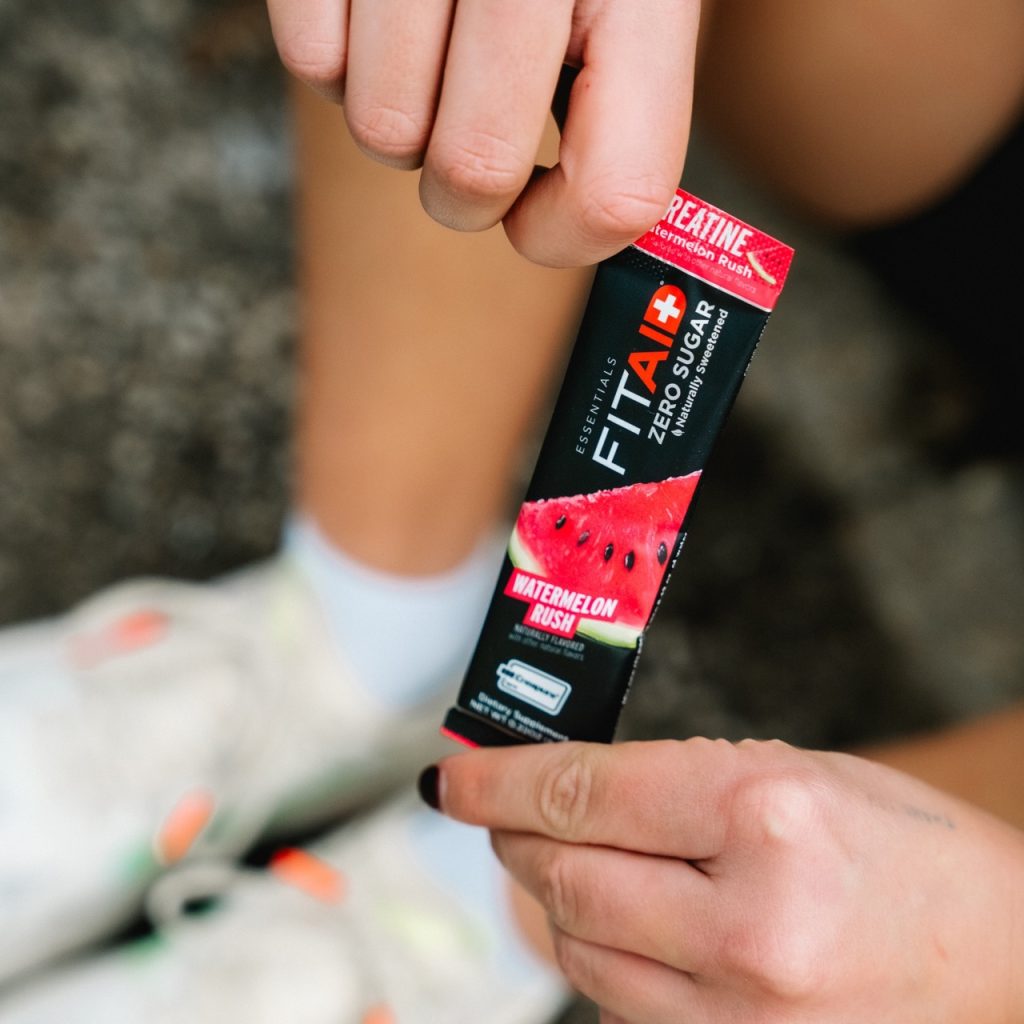
This is where FITAID Creatine aligns.
FITAID Creatine & Menopause-Friendly Supplementation
FITAID Creatine (formerly FITAID RX) is available in:
• Powder format
• Ready-to-drink beverage format
Features include:
✔ Naturally sweetened (monk fruit + stevia)
✔ Zero sugar options
✔ No artificial sweeteners
✔ Electrolytes included
✔ CreaBev® encapsulated creatine technology in RTD format
✔ Designed to supplement broader creatine routines
FITAID Creatine drinks are positioned as supplemental to your overall creatine strategy, not replacements for a foundational strength program.
Menopause-focused supplementation should always center on:
- Resistance training
- Protein intake
- Recovery
- Sleep
- Long-term consistency
Creatine supports the energy used during those sessions.
Common Questions About Creatine & Menopause
Does creatine cause weight gain during menopause?
Creatine increases water content inside muscle cells — not body fat. Weight shifts are typically related to intracellular hydration.
Can creatine affect hormones?
Creatine does not function as a hormone and does not replace estrogen. It supports ATP energy systems.
Should women in perimenopause take creatine?
Some women incorporate creatine into resistance-focused training strategies. Supplementation decisions should be individualized and discussed with healthcare providers.
Is creatine helpful for strength after menopause?
Creatine supports ATP regeneration used in resistance training. Resistance training supports strength preservation.
Comparison: Creatine Strategy During Menopause
| Factor | Without Creatine | With Creatine + Training |
|---|---|---|
| ATP Support | Dietary baseline | Supplemental support |
| Training Intensity | Personal capacity | May support higher output |
| Muscle Preservation | Training-dependent | Training remains primary |
| Hormonal Support | Lifestyle-dependent | Creatine does not replace hormones |
Important: Creatine does not solve menopause.
It supports the work you put in.
Voice Search Optimized Answer
If someone asks:
“Is creatine good during menopause?”
Answer:
Creatine is a well-studied supplement that supports ATP energy production during resistance training. During menopause, strength training becomes increasingly important for maintaining muscle and function. Some women incorporate creatine as part of a strength-focused routine, but supplementation decisions should be individualized and discussed with a healthcare provider.
Why Creatine Is Becoming Part of the Menopause Conversation
Menopause conversations have shifted from:
“Weight control”
to
“Strength, power, resilience, and longevity.”
That shift changes everything.
Muscle preservation becomes critical.
Strength training becomes medicine.
Creatine supports the energy system that powers strength training.
That’s why interest continues rising.
The Bottom Line
Menopause is a transition — not a decline.
Strength training is foundational for midlife women.
Creatine supports the ATP energy system used during high-intensity effort.
It does not replace hormones.
It does not treat menopause.
It supports performance within a strength-based lifestyle.
FITAID Creatine — in both powder and ready-to-drink formats — offers naturally sweetened, zero sugar options that align with ingredient-conscious, active women navigating midlife.
Menopause isn’t about shrinking.
It’s about lifting.
And training with intention.