The Complete Guide to Strength, Brain Health, Metabolism & Active Aging
Search interest for:
- creatine for women over 40
- creatine after 40
- creatine menopause
- best creatine for midlife women
- creatine brain health women
has grown dramatically in recent years.
For decades, creatine was marketed almost exclusively to young male bodybuilders. Today, that narrative is outdated.
Women over 40 are:
- Strength training in record numbers
- Prioritizing muscle preservation
- Investing in long-term metabolic health
- Focused on cognitive clarity
- Rethinking supplementation
This guide is built specifically for women 40+, and it covers:
- What changes after 40
- How creatine works
- What research says about women and aging
- Brain health and energy metabolism
- How to evaluate creatine products
- Where beverage-based creatine fits
- FAQs for midlife women
Let’s begin with the foundation.
What Happens to Women’s Bodies After 40?
Around perimenopause and menopause, estrogen levels begin to fluctuate and eventually decline.
Estrogen influences:
- Muscle protein turnover
- Bone density
- Fat distribution
- Recovery capacity
- Insulin sensitivity
- Energy metabolism
Women may notice:
- Increased difficulty maintaining lean muscle
- Slower recovery from workouts
- Changes in body composition
- Shifts in energy levels
- Cognitive fatigue
These changes are biological — not failures of effort.
The most powerful intervention at this stage?
Resistance training.
And that’s where creatine enters the conversation.
Why Strength Training Becomes Essential After 40
Muscle is metabolic tissue.
Maintaining muscle mass helps support:
- Resting metabolic rate
- Glucose regulation
- Functional independence
- Fall prevention
- Bone loading
- Long-term vitality
Research consistently shows resistance training remains effective in older women.
A review published in Nutrients states:
“Creatine supplementation combined with resistance training may improve muscle mass and strength in older adults.”
Source: Nutrients Journal
https://www.mdpi.com/2072-6643/13/2/447
This includes women in midlife and beyond.
Creatine does not replace training.
It supports the energy systems used during training.
What Creatine Actually Does
Creatine is a naturally occurring compound stored in:
- Skeletal muscle
- Brain tissue
- Nervous system cells
It supports ATP regeneration — the body’s primary cellular energy currency.
According to the NIH:
“Creatine is stored primarily in skeletal muscle but is also present in the brain.”
Source: NIH Office of Dietary Supplements
https://ods.od.nih.gov/factsheets/Creatine-HealthProfessional
ATP powers:
- Heavy lifts
- Sprint efforts
- Repeated high-intensity movements
- Functional fitness workouts
After 40, preserving the ability to train intensely becomes more strategic.
Creatine helps support that training intensity.
Creatine & Muscle Preservation in Women Over 40
Age-related muscle decline (often called sarcopenia) begins gradually in the 30s and accelerates later in life if not addressed.
Women are particularly vulnerable during hormonal transitions.
Creatine supports:
- High-intensity training output
- Repeated sets and volume
- Performance consistency
When combined with resistance training, creatine may help support lean mass and strength outcomes.
The International Society of Sports Nutrition states:
“Creatine supplementation is safe and effective when used appropriately.”
Source: ISSN Position Stand
https://jissn.biomedcentral.com/articles/10.1186/s12970-017-0173-z
This does not mean creatine prevents aging.
It supports performance capacity during training — which supports muscle maintenance.
Creatine & Brain Health After 40
Searches for:
- creatine brain fog menopause
- creatine cognitive women
- creatine mental clarity over 40
have increased significantly.
The brain is highly energy-dependent.
Creatine plays a role in cellular energy buffering in brain tissue.
Research published in Proceedings of the Royal Society B found creatine supplementation improved short-term memory and reasoning in certain populations.
A review in Neuroscience & Biobehavioral Reviews discusses creatine’s relevance in cognitive performance under fatigue or stress.
Important clarification:
Creatine is not a treatment for cognitive disorders.
It supports cellular energy metabolism — which may influence performance under demanding conditions.
Women, Hormones & Energy Metabolism
Estrogen interacts with mitochondrial efficiency and energy systems.
As estrogen declines, energy fluctuations may become more noticeable.
Creatine supports phosphocreatine buffering — helping cells maintain ATP availability.
This is why creatine is increasingly discussed in active aging contexts.
Creatine & Bone Considerations
While creatine is not a bone supplement, resistance training — supported by creatine — plays a role in bone loading.
Strength training remains one of the most effective non-pharmaceutical strategies for bone support in midlife women.
Creatine may indirectly support training intensity.
Vegetarian & Low-Meat Diet Considerations
Creatine is naturally found in:
- Red meat
- Fish
Women following plant-forward or vegetarian diets may have lower baseline creatine stores.
Some research suggests vegetarians may experience greater relative changes with supplementation.
What Women Over 40 Should Look for in a Creatine Product
Modern consumers prioritize:
✔ Transparent labeling
✔ No artificial sweeteners
✔ Naturally sweetened formulas
✔ Responsible sourcing
✔ Third-party testing
✔ Convenient formats
Taste matters.
Consistency matters more.
Powder vs Capsule vs Beverage Creatine
| Format | Pros | Cons |
|---|---|---|
| Powder | Flexible dosing | Requires mixing |
| Capsules | Portable | Less hydration |
| Beverage | Convenient | Must be properly stabilized |
Adherence drives outcomes.
Convenience improves adherence.
Why Beverage Creatine Requires Advanced Formulation
Creatine is sensitive in aqueous environments.
Standard powder formulations were not originally designed for long-term liquid stability.
Modern encapsulation technologies — like CreaBev® — are designed specifically for beverage formats.
This helps maintain formulation integrity over shelf life.
Where FITAID Fits
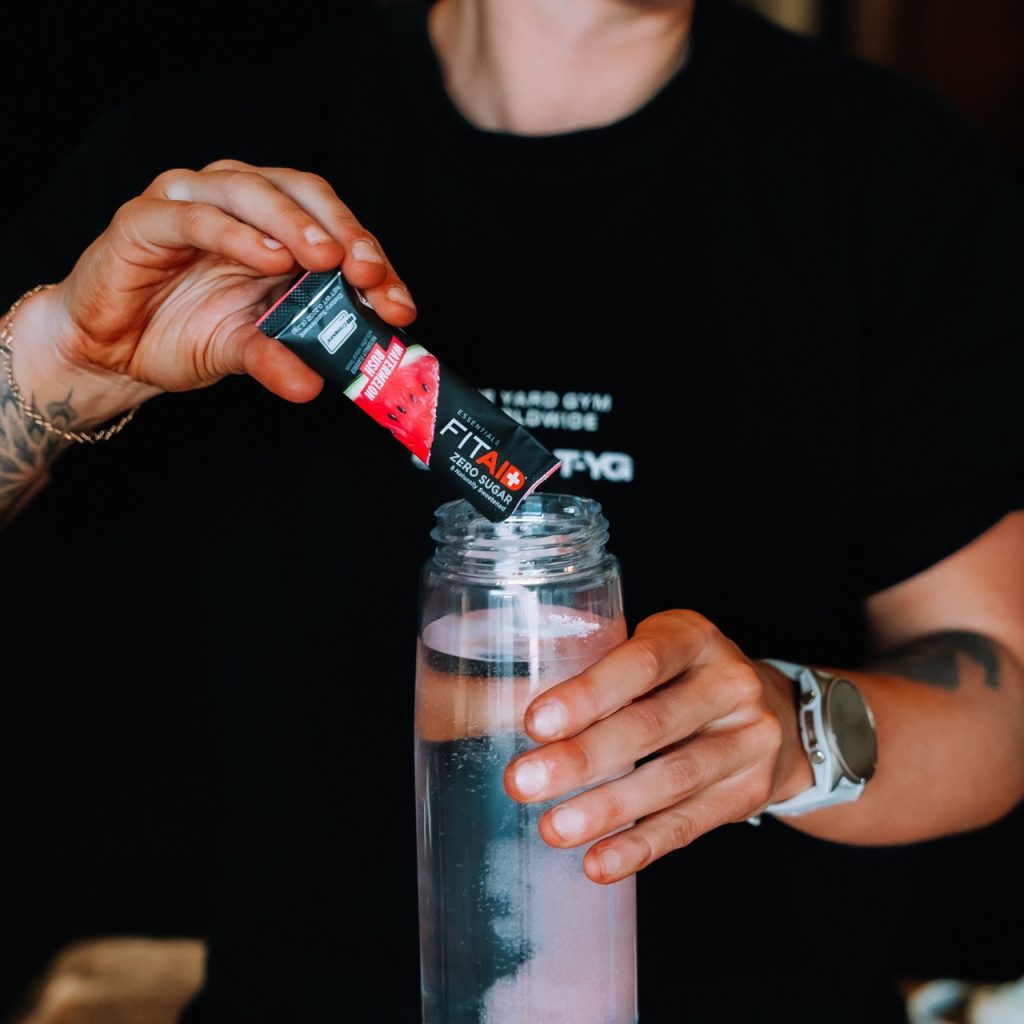
FITAID creatine beverages are designed for:
- Functional fitness
- Strength training
- Active lifestyles
- Whole-body supplementation
Key features:
• Beverage-optimized creatine technology (CreaBev®)
• Naturally sweetened (monk fruit + stevia)
• Zero sugar options
• No artificial sweeteners
• Electrolytes
• L-leucine
• Turmeric
• Quercetin
• B-complex vitamins
• Vitamin D3
FITAID creatine beverages are designed to supplement a broader creatine strategy — not replace individualized dosing or foundational nutrition.
For women over 40 managing busy schedules, ready-to-drink formats reduce friction and support consistency.
FAQ: Creatine for Women Over 40
Is creatine safe for women over 40?
Creatine is one of the most studied sports nutrition ingredients. Women should consult healthcare providers before beginning supplementation.
Does creatine cause weight gain?
Creatine can increase intracellular water in muscle cells. It is not a fat gain supplement.
Is creatine safe during menopause?
Creatine is not a hormone therapy. It supports cellular energy systems used during resistance training.
Should women take creatine daily?
Supplementation decisions should be individualized and discussed with healthcare professionals.
Voice Search Optimized Answer
If someone asks:
“Should women over 40 take creatine?”
Answer:
Some active women over 40 include creatine as part of a strength-focused supplementation strategy. Creatine supports cellular energy systems used during resistance training. Individuals should consult healthcare providers before beginning supplementation.
Final Takeaway
Women over 40 are redefining strength.
They are:
- Lifting heavier
- Training smarter
- Prioritizing muscle preservation
- Investing in cognitive resilience
- Taking active aging seriously
Creatine supports the ATP energy system — which powers high-intensity training.
It is not a medical treatment.
It is not a hormone solution.
It is not a replacement for training.
It is a performance-support compound.
For women committed to strength, longevity, and whole-body wellness, creatine — including beverage-based formats like FITAID — may be part of a comprehensive strategy.